
Skin Science · Collagen
Collagen: how it forms and why it declines
Collagen is the protein that gives skin its strength and firmness. From early adulthood the skin makes less of it and breaks down more of it, and that slow imbalance explains much of what we see as skin aging.
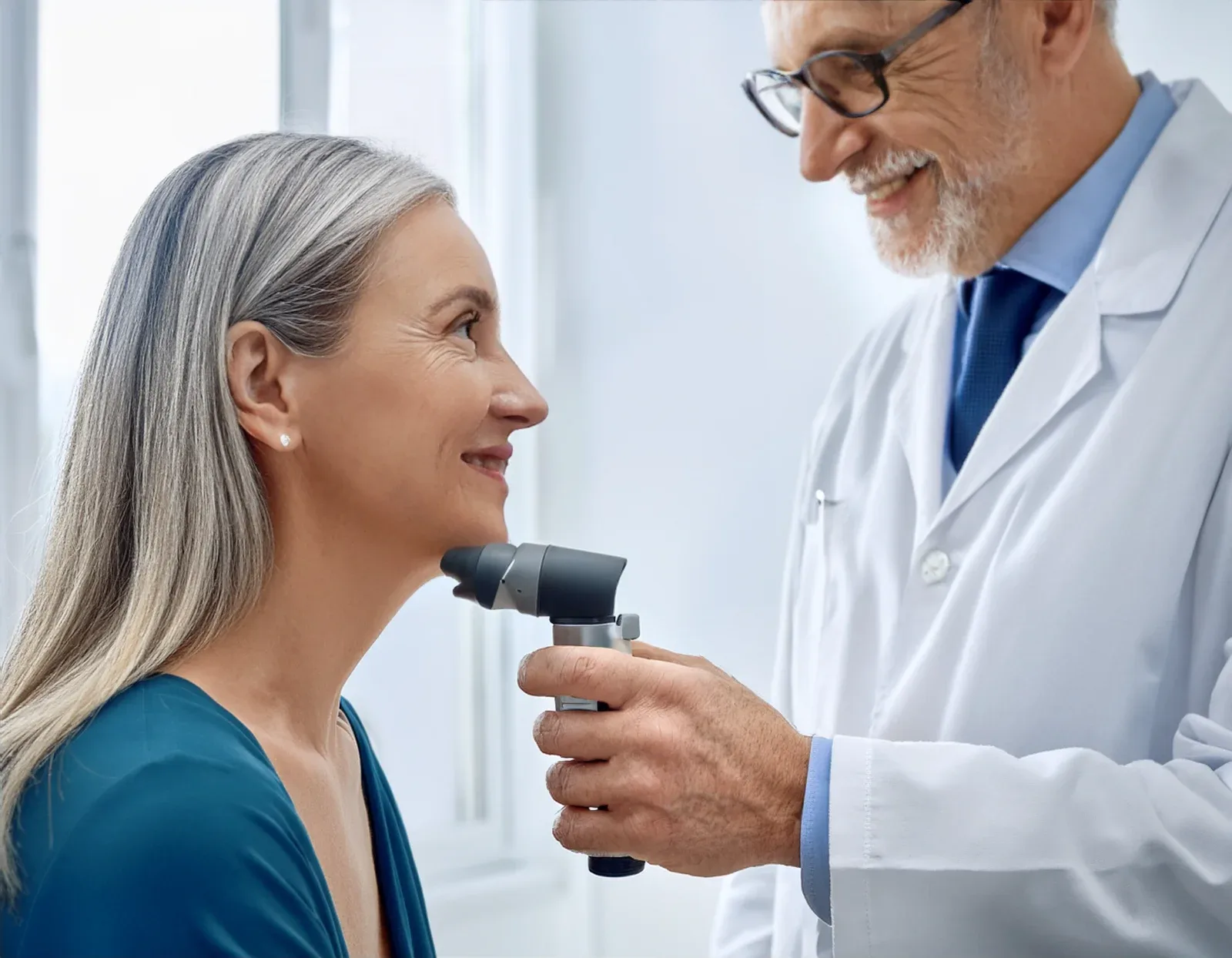
What collagen does in the skin
Collagen makes up most of the dermis, the supportive layer beneath the surface. Types I and III form a dense network of fibers that holds the skin firm and lets it resist stretching. Fibroblasts, the cells that live within this network, produce it.
The amount of collagen in the skin is not fixed. It is the balance between what fibroblasts build and what enzymes called matrix metalloproteinases break down. As long as building keeps pace, the network stays dense. When breakdown outweighs it, the dermis thins and loses its spring.
How the skin makes collagen
Fibroblasts produce procollagen, which is then processed and assembled into fibers outside the cell. Several enzymes in this chain depend on vitamin C as a cofactor. Without enough vitamin C, collagen synthesis falters, which is why its absence causes scurvy.
Fibroblasts also respond to their surroundings. In young skin they are stretched by the collagen fibers they attach to, and that mechanical tension keeps them productive. This detail turns out to matter for why collagen production slows with age.
Why collagen declines
Age itself. Skin collagen falls steadily with age, and women have less skin collagen than men at every age. Fibroblasts from older skin produce less type I procollagen than fibroblasts from young skin, and in aged skin they are less stretched, so they receive weaker signals to build.
Sunlight. UV radiation activates the enzymes that degrade collagen and suppresses new collagen production. Over years this adds photoaging on top of chronological aging. The damaged, fragmented collagen then weakens the environment the fibroblasts depend on, which further slows production. More on this in our article on UV radiation and photoaging.
Hormones. Skin collagen is influenced by sex hormones. In postmenopausal women skin collagen declines in relation to the years since menopause rather than to age alone, and women treated with hormones had thicker skin with more collagen. Read more in skin in menopause.
What supports collagen
Daily sun protection limits the UV driven breakdown that accounts for much of the loss. It is the most effective preventive step. See mineral versus chemical sunscreen.
Retinoids act on collagen directly. In a controlled study in very elderly adults, topical retinol improved fine wrinkles and increased procollagen I in the treated skin. Our retinoids article explains how to use them.
Topical vitamin C increased the expression of collagen I and III in the dermis in a controlled study, in line with its role in collagen synthesis.
Collagen supplements have modest evidence. In one double blind trial, women aged 35 to 55 taking collagen peptides for eight weeks showed better skin elasticity than placebo. The effect is real but small, and studies are short. More in skin supplements.
Clinical treatments can stimulate fibroblasts directly. Microneedling creates controlled micro injuries that trigger new collagen formation. Our article on polynucleotides covers another biostimulating approach.
At HALO Labs the collagen stimulating treatments are microneedling, polynucleotides and PRP for the face, always after a medical consultation in our labs in Munich, Berlin and Hamburg.
The bottom line
Collagen loss is gradual and starts early, driven by age, sunlight and hormones. The most reliable protection is consistent sun protection combined with proven actives such as retinoids. Where the skin already shows the change, treatments that stimulate fibroblasts can help rebuild what time has taken.
References
- Shuster S, Black MM, McVitie E. The influence of age and sex on skin thickness, skin collagen and density. Br J Dermatol. 1975;93(6):639-643. PMID 1220811.
- Varani J, Dame MK, Rittie L, et al. Decreased collagen production in chronologically aged skin: roles of age-dependent alteration in fibroblast function and defective mechanical stimulation. Am J Pathol. 2006;168(6):1861-1868. PMID 16723701.
- Fisher GJ, Kang S, Varani J, et al. Mechanisms of photoaging and chronological skin aging. Arch Dermatol. 2002;138(11):1462-1470. PMID 12437452.
- Quan T, Fisher GJ. Role of age-associated alterations of the dermal extracellular matrix microenvironment in human skin aging: a mini-review. Gerontology. 2015;61(5):427-434. PMID 25660807.
- Brincat M, Moniz CJ, Studd JW, et al. Long-term effects of the menopause and sex hormones on skin thickness. Br J Obstet Gynaecol. 1985;92(3):256-259. PMID 3978054.
- Kafi R, Kwak HS, Schumacher WE, et al. Improvement of naturally aged skin with vitamin A (retinol). Arch Dermatol. 2007;143(5):606-612. PMID 17515510.
- Nusgens BV, Humbert P, Rougier A, et al. Topically applied vitamin C enhances the mRNA level of collagens I and III, their processing enzymes and tissue inhibitor of matrix metalloproteinase 1 in the human dermis. J Invest Dermatol. 2001;116(6):853-859. PMID 11407971.
- Proksch E, Segger D, Degwert J, et al. Oral supplementation of specific collagen peptides has beneficial effects on human skin physiology: a double-blind, placebo-controlled study. Skin Pharmacol Physiol. 2014;27(1):47-55. PMID 23949208.
- Aust MC, Fernandes D, Kolokythas P, et al. Percutaneous collagen induction therapy: an alternative treatment for scars, wrinkles, and skin laxity. Plast Reconstr Surg. 2008;121(4):1421-1429. PMID 18349665.
Ready to put this into practice?
Consultations at HALO are free and never obligatory. Bring your questions.
Book Now