
Biostimulators · Collagen Induction Therapy
Microneedling: mechanical collagen induction explained
Microneedling creates controlled micro-injuries to trigger the skin’s wound-healing cascade. The mechanism is elegantly simple, the evidence is strong, and it is one of the most effective ways to stimulate collagen production without heat or ablation.
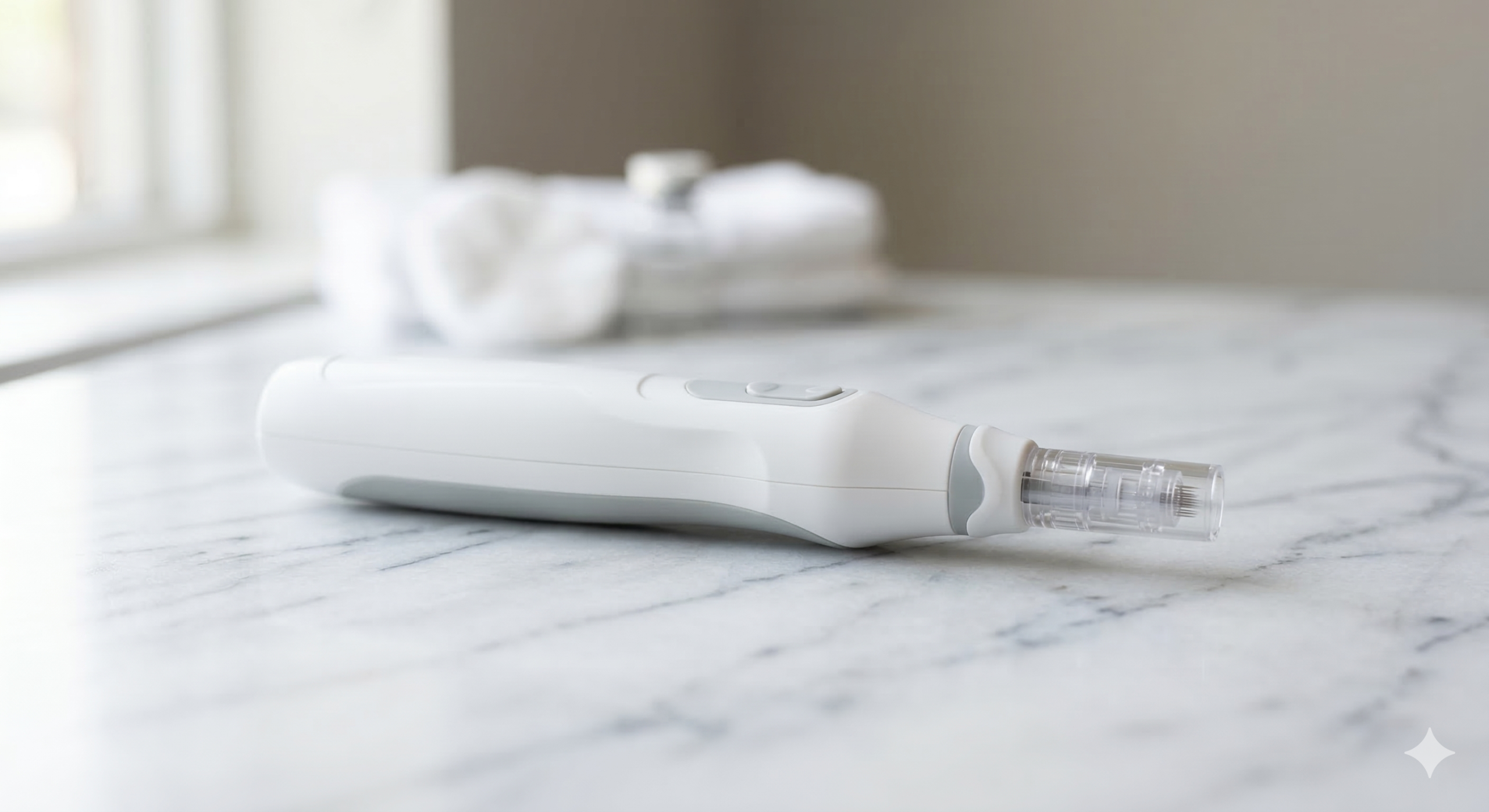
The wound-healing cascade
Microneedling uses fine needles to create thousands of micro-channels through the epidermis into the upper dermis. Each micro-injury is minute, well below the threshold for visible damage, but collectively they trigger the skin’s full wound-healing response.
The response proceeds in three overlapping phases: the inflammatory phase (platelet activation, growth factor release, immune cell recruitment), the proliferative phase (fibroblast activation, collagen and elastin synthesis, new blood vessel formation), and the remodelling phase (collagen maturation and structural reorganization, which continues for weeks to months).
Collagen induction: what actually changes
The primary therapeutic effect is the stimulation of new Type I and Type III collagen deposition in the dermis. Type III collagen (predominant in early wound healing) is progressively replaced by Type I collagen (structural collagen that gives skin firmness and resilience) over 3 to 6 months following treatment.
Microneedling also creates a state of controlled increased skin permeability immediately following treatment, the micro-channels remain open for a short window, significantly increasing the absorption of topically applied or injected active ingredients. This is one of the key mechanisms behind the effectiveness of combining microneedling with polynucleotides or PRP.
Combination protocols
Microneedling and polynucleotides represent a particularly logical combination. Microneedling creates the micro-channels and triggers the wound-healing signal; polynucleotides provide a direct fibroblast stimulus that deepens and extends the regenerative response beyond what mechanical injury alone achieves.
Microneedling and PRP (often called the “vampire facial”) combines mechanical injury stimulation with the growth factor cascade of concentrated autologous plasma, addressing the same healing pathways from two complementary angles. The net effect of either combination is generally greater than the sum of individual treatments.
Aftercare
Redness and mild swelling are normal and typically resolve within 24 to 48 hours. Keep skincare minimal for 48 hours: a gentle cleanser, fragrance-free moisturizer, and high-SPF sunscreen only. Avoid retinoids, exfoliating acids, vitamin C serums, and alcohol-based products during this window. Avoid sun exposure, saunas, and swimming pools for at least 48 hours.
Not suitable for anyone with active acne in the treatment area, active skin infections, keloid scarring history, or anticoagulant medications. Not recommended during pregnancy or breastfeeding.
References
- Alster TS, Graham PM. Microneedling: A Review and Practical Guide. Dermatol Surg. 2018;44(3):397-404. PMID 28796657.
- Gonzalez AC, Costa TF, Andrade ZA, et al. Wound healing - A literature review. An Bras Dermatol. 2016;91(5):614-620. PMID 27828635.
- El-Domyati M, Barakat M, Awad S, et al. Multiple microneedling sessions for minimally invasive facial rejuvenation: an objective assessment. Int J Dermatol. 2015;54(12):1361-1369. PMID 26096653.
- Aust MC, Fernandes D, Kolokythas P, et al. Percutaneous collagen induction therapy: an alternative treatment for scars, wrinkles, and skin laxity. Plast Reconstr Surg. 2008;121(4):1421-1429. PMID 18349665.
- Kalluri H, Kolli CS, Banga AK. Characterization of microchannels created by metal microneedles: formation and closure. AAPS J. 2011;13(3):473-481. PMID 21732220.
- Kang C, Lu D. Combined Effect of Microneedling and Platelet-Rich Plasma for the Treatment of Acne Scars: A Meta-Analysis. Front Med (Lausanne). 2021;8:788754. PMID 35237616.
- El-Domyati M, Abdel-Wahab H, Hossam A. Combining microneedling with other minimally invasive procedures for facial rejuvenation: a split-face comparative study. Int J Dermatol. 2018;57(11):1324-1334. PMID 30105816.
- Chu S, Foulad DP, Atanaskova Mesinkovska N. Safety Profile for Microneedling: A Systematic Review. Dermatol Surg. 2021;47(9):1249-1254. PMID 34448760.
Ready to put this into practice?
Consultations at HALO are free and never obligatory. Bring your questions.
Book Now