
Biostimulators · DNA-Derived Regeneration
Polynucleotides: regeneration at the cellular level
Polynucleotides are naturally derived DNA fragments that stimulate the skin’s own repair mechanisms, not by adding volume or relaxing muscle, but by improving the fundamental quality of the skin itself.
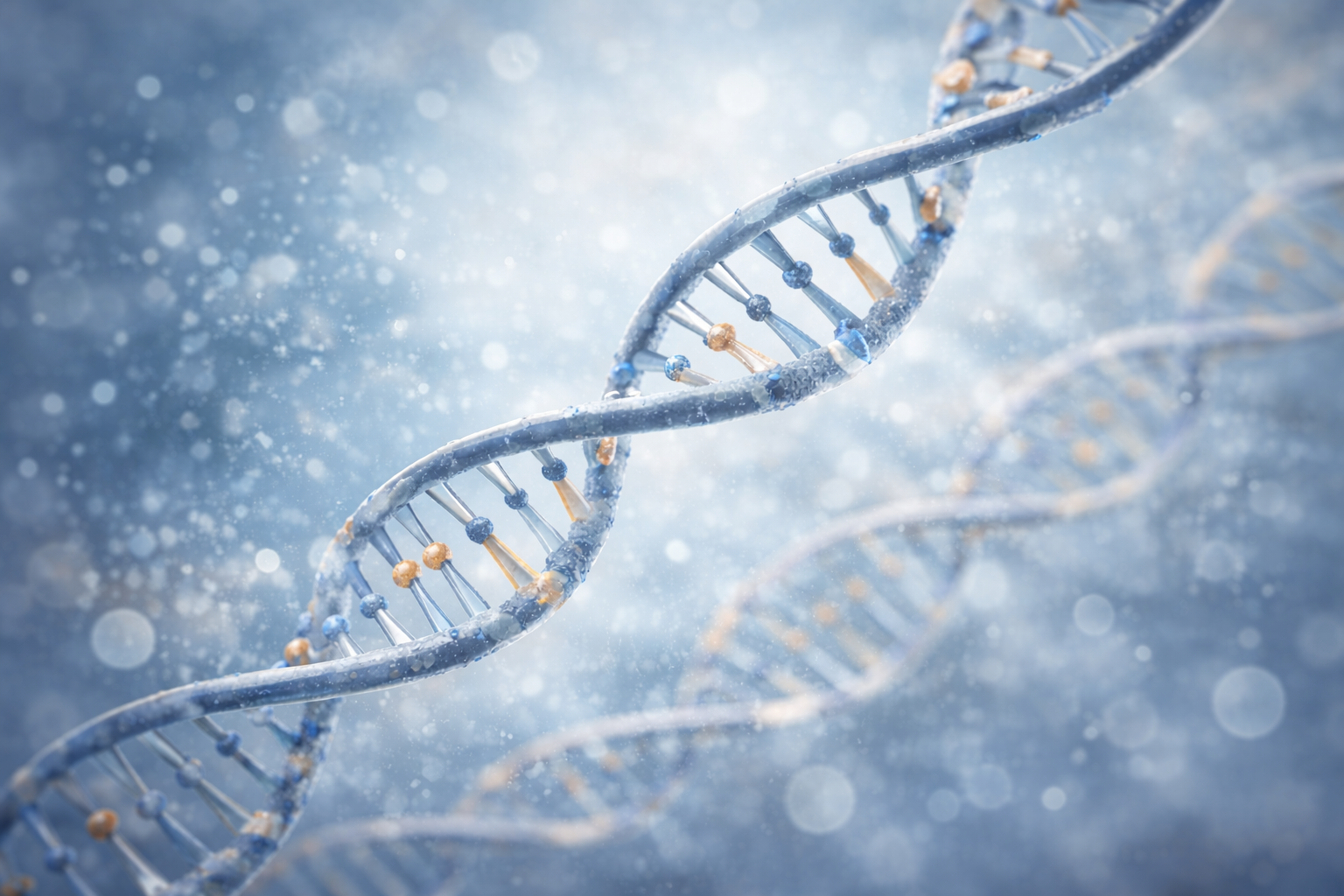
What polynucleotides are
Polynucleotides (PNs) are highly purified fragments of DNA, typically derived from salmon or trout, which share high structural compatibility with human DNA. When injected into the dermis, they act as biological signals that activate fibroblasts, the cells responsible for producing collagen and elastin.
Their mechanism operates on multiple levels simultaneously: they stimulate collagen and elastin synthesis, attract and bind water molecules for deep structural hydration, and reduce chronic low-grade inflammation at the cellular level, a key driver of premature skin aging now described in the literature as “inflammaging.”
The biological mechanism
Polynucleotides are taken up by fibroblasts in the dermis, where they activate cellular repair and proliferation pathways, specifically via adenosine receptor signaling. This triggers a downstream cascade promoting collagen Type I and III production, reducing MMPs (the enzymes that degrade collagen), and reducing pro-inflammatory cytokine activity.
The key distinction from surface treatments: Polynucleotides work at the level of the dermis, the structural layer where collagen, elastin, and fibroblasts reside. Unlike topical products that cannot penetrate to this depth in meaningful concentrations, injected PNs deliver a direct cellular stimulus where structural change is actually possible.
How polynucleotides differ from Botox, filler, and skin boosters
Polynucleotides occupy a distinct category from every other injectable treatment. Botox relaxes muscles. Filler adds volume. HA skin boosters hydrate the surface. Polynucleotides improve the skin’s fundamental capacity to repair and renew itself.
| TREATMENT | MECHANISM | PRIMARY OUTCOME |
|---|---|---|
| Botox | Acetylcholine inhibition at neuromuscular junction | Softened dynamic wrinkles |
| HA filler | Volume addition beneath skin surface | Restored facial contour |
| HA skin boosters | Surface-level hydration | Temporary moisture and glow |
| Polynucleotides | Fibroblast activation, collagen stimulation, anti-inflammatory signaling | Structural improvement in skin quality |
Because polynucleotides stimulate genuine tissue regeneration, their results compound with each session. The improvement reflects real structural change, and tends to outlast volume-based or surface-level alternatives significantly.
Treatment course, results, and timeline
An initial course of 3 to 4 sessions spaced 2 to 4 weeks apart is typically recommended, allowing the polynucleotides to progressively deepen the collagen remodelling response. After the initial course, maintenance sessions every 4 to 6 months sustain and extend results.
Most patients notice improved hydration and a subtler, more rested appearance within 1 to 2 weeks of their first session. Firmer, brighter skin with improved elasticity becomes more apparent around weeks 4 to 6. Peak results, including visible reduction in fine lines and improved texture, typically appear 8 to 12 weeks after completing the full course. Results generally last 6 to 12 months, with some patients reporting benefits for up to 18 months.
Aftercare and contraindications
Some redness, swelling, and tenderness at injection sites are completely normal and typically resolve within 72 hours. Small lumps at injection sites are harmless and disappear over a few days, do not rub or massage these. Hold off on intense physical activity for 24 to 48 hours and keep skincare gentle: avoid retinoids, exfoliating acids, and alcohol-based products for the first 48 hours.
Not suitable for anyone with a fish or shellfish allergy (the product is derived from salmon or trout DNA), individuals with active autoimmune conditions or skin infections, or those in the treatment area with inflamed skin. Not recommended during pregnancy, breastfeeding, or IVF.
COMBINATION PROTOCOLS
Polynucleotides pair exceptionally well with microneedling (which enhances dermal penetration) and Botox (which addresses dynamic lines that PNs do not target). The two mechanisms are complementary and address different aspects of skin quality simultaneously.
References
- Kim TH, Heo SY, Oh GW, et al. Applications of Marine Organism-Derived Polydeoxyribonucleotide: Its Potential in Biomedical Engineering. Mar Drugs. 2021;19(6). PMID 34067499.
- Byun KA, Park HJ, Oh S, et al. Polynucleotides Enhance Collagen Synthesis via Modulating Phosphoenolpyruvate Carboxykinase 1 in Senescent Macrophages: Experimental Evidence. Int J Mol Sci. 2025;26(17). PMID 40943641.
- Pilkington SM, Bulfone-Paus S, Griffiths CEM, et al. Inflammaging and the Skin. J Invest Dermatol. 2021;141(4S):1087-1095. PMID 33358020.
- Galeano M, Pallio G, Irrera N, et al. Polydeoxyribonucleotide: A Promising Biological Platform to Accelerate Impaired Skin Wound Healing. Pharmaceuticals (Basel). 2021;14(11). PMID 34832885.
- Cavallini M, Bartoletti E, Maioli L, et al. Consensus report on the use of PN-HPT™ (polynucleotides highly purified technology) in aesthetic medicine. J Cosmet Dermatol. 2021;20(3):922-928. PMID 32799391.
- Lee YJ, Kim HT, Lee YJ, et al. Comparison of the effects of polynucleotide and hyaluronic acid fillers on periocular rejuvenation: a randomized, double-blind, split-face trial. J Dermatolog Treat. 2022;33(1):254-260. PMID 32248707.
- Lampridou S, Bassett S, Cavallini M, et al. The Effectiveness of Polynucleotides in Esthetic Medicine: A Systematic Review. J Cosmet Dermatol. 2025;24(2):e16721. PMID 39645667.
Ready to put this into practice?
Consultations at HALO are free and never obligatory. Bring your questions.
Book Now