
Skin Science · Evidence Review
Supplements for skin: what the evidence actually supports
The supplement market for skin health is vast and unevenly supported by evidence. A clear-eyed review of what the clinical data shows, what works, what is overstated, and what the mechanisms suggest.
Oral collagen peptides
Oral collagen peptides have a growing evidence base. When collagen is hydrolyzed into smaller peptides, the resulting dipeptides and tripeptides, particularly hydroxyproline-proline, are absorbed intact through the gut and have been shown in multiple RCTs to reach skin tissue and stimulate fibroblast collagen synthesis.
A 2019 systematic review and meta-analysis (Choi et al., Journal of Drugs in Dermatology) found consistent evidence for improved skin elasticity and hydration with 2.5 to 10g daily of hydrolyzed collagen over 8 to 12 weeks. The mechanism is not “eat collagen and it becomes collagen”, rather, the absorbed peptides act as signaling molecules that trigger endogenous collagen production. Vitamin C is a required cofactor in collagen synthesis; taking collagen peptides with Vitamin C has a biochemical rationale. Consistent dosing over months is required for meaningful effects.
Vitamin C
Vitamin C (ascorbic acid) is one of the most evidence-supported supplements for skin health. It is a required cofactor in collagen synthesis (two distinct hydroxylation steps that cannot proceed without it), a direct antioxidant that neutralizes ROS from UV exposure, and a regulator of melanin synthesis via inhibition of tyrosinase. It is also one of the components of the Skin Rejuvenation infusion.
Topical Vitamin C has good evidence in the range of 10 to 20% L-ascorbic acid, but is limited by stability and penetration. Oral supplementation maintains tissue concentrations reliably. 500mg daily is generally cited as the threshold above which most tissues reach saturation; higher doses increase urinary excretion rather than tissue concentration for most people.
Omega-3 fatty acids
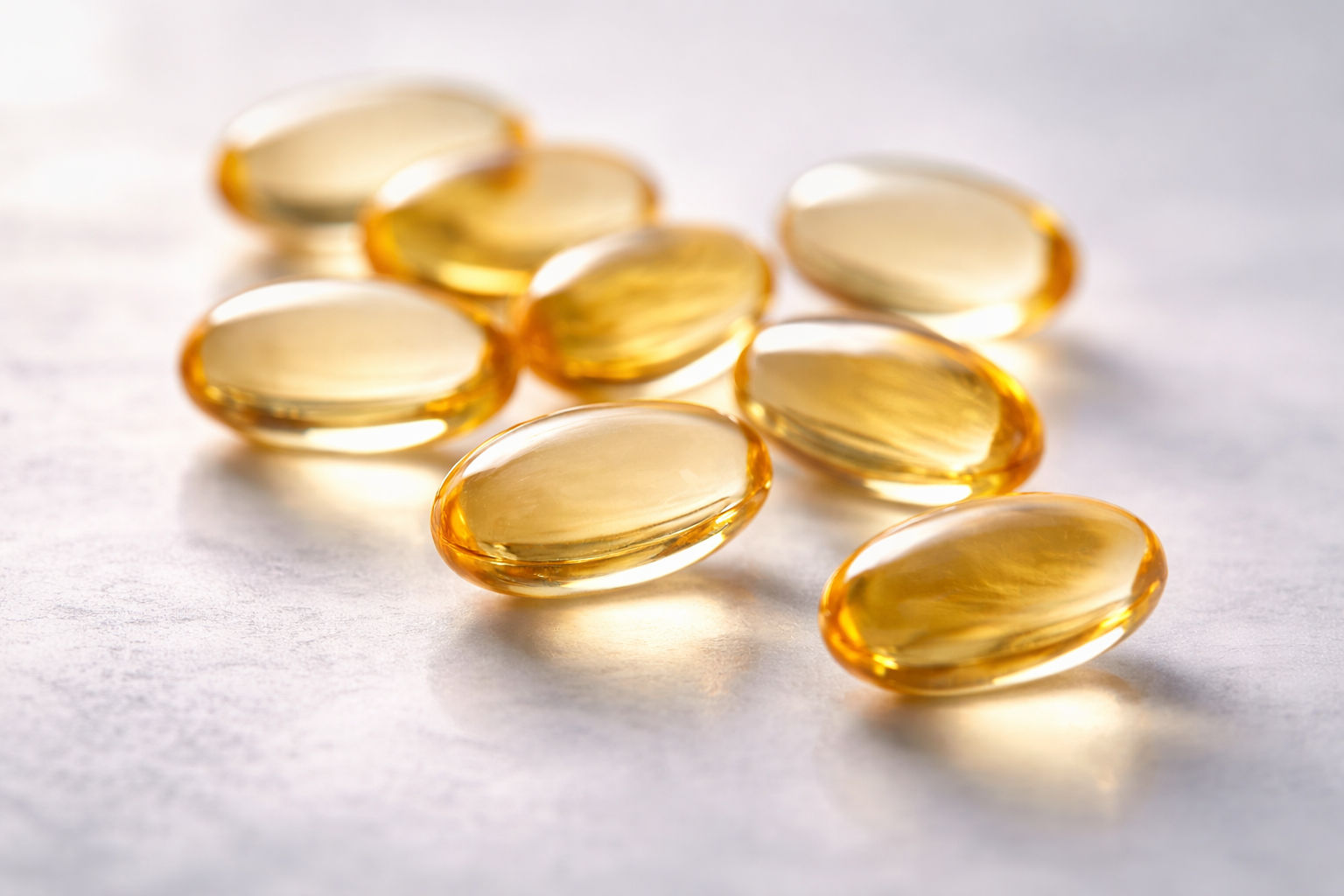
Omega-3 fatty acids, specifically EPA and DHA, are incorporated into cell membranes throughout the body, including skin cells, where they influence membrane fluidity, barrier function, and inflammatory signaling. EPA competes with arachidonic acid for conversion by COX and LOX enzymes, shifting the balance from pro-inflammatory eicosanoids toward less inflammatory products.
Clinical evidence supports meaningful reductions in inflammatory cytokines (IL-6, TNF-α, CRP) with 2 to 4g daily EPA+DHA combined. For skin specifically, Omega-3 supplementation has been shown to improve hydration, reduce UV-induced inflammatory responses, and support barrier function. The ratio of EPA:DHA matters, EPA is more relevant for anti-inflammatory effects; DHA for membrane structural properties.
Polyphenols
Polyphenols are a large class of plant compounds with antioxidant and anti-inflammatory properties. The evidence for specific polyphenols varies considerably. EGCG (epigallocatechin gallate, from green tea) has the strongest skin-specific evidence: it activates Nrf2 (the master antioxidant transcription factor), inhibits MMP activity, and has shown measurable effects on UV-induced damage in controlled trials.
Dietary polyphenols from whole foods (berries, olive oil, dark chocolate, tea) provide consistent low-dose exposure across multiple compounds. Dietary diversity and consistent intake appear more important than any single isolated polyphenol supplement.
Vitamin D
Vitamin D (synthesized in skin via UVB conversion of 7-dehydrocholesterol to cholecalciferol) is essential for immune regulation, bone health, and cellular differentiation, including in keratinocytes. Deficiency is common, particularly in northern latitudes and in people who use consistent high-SPF sun protection.
Biotin: the important caveat
Biotin (Vitamin B7) is heavily marketed for hair and nail health. The evidence for supplementation in individuals without diagnosed biotin deficiency is weak, clinically significant deficiency is rare, and most people obtain adequate biotin from diet. Hair and nail benefits attributed to high-dose biotin supplementation in non-deficient individuals are not supported by robust clinical trials.
More importantly: high-dose biotin supplementation (the doses in most commercial hair/nail supplements) interferes with laboratory blood tests, including thyroid function tests (TSH, T3, T4), troponin (cardiac marker), and several hormonal assays, by interfering with the streptavidin-biotin detection system used in many immunoassays. Patients should inform their physician of high-dose biotin supplementation before blood testing.
References
- Choi FD, Sung CT, Juhasz ML, et al. Oral Collagen Supplementation: A Systematic Review of Dermatological Applications. J Drugs Dermatol. 2019;18(1):9-16. PMID 30681787.
- Pullar JM, Carr AC, Vissers MCM. The Roles of Vitamin C in Skin Health. Nutrients. 2017;9(8). PMID 28805671.
- Levine M, Conry-Cantilena C, Wang Y, et al. Vitamin C pharmacokinetics in healthy volunteers: evidence for a recommended dietary allowance. Proc Natl Acad Sci U S A. 1996;93(8):3704-3709. PMID 8623000.
- Li K, Huang T, Zheng J, et al. Effect of marine-derived n-3 polyunsaturated fatty acids on C-reactive protein, interleukin 6 and tumor necrosis factor α: a meta-analysis. PLoS One. 2014;9(2):e88103. PMID 24505395.
- Pilkington SM, Watson RE, Nicolaou A, et al. Omega-3 polyunsaturated fatty acids: photoprotective macronutrients. Exp Dermatol. 2011;20(7):537-543. PMID 21569104.
- Heinrich U, Moore CE, De Spirt S, et al. Green tea polyphenols provide photoprotection, increase microcirculation, and modulate skin properties of women. J Nutr. 2011;141(6):1202-1208. PMID 21525260.
- Wacker M, Holick MF. Sunlight and Vitamin D: A global perspective for health. Dermatoendocrinol. 2013;5(1):51-108. PMID 24494042.
- Patel DP, Swink SM, Castelo-Soccio L. A Review of the Use of Biotin for Hair Loss. Skin Appendage Disord. 2017;3(3):166-169. PMID 28879195.
- Dasgupta A. Immunoassay design and biotin interference. Adv Clin Chem. 2022;109:165-183. PMID 35953126.
- Frame IJ, Joshi PH, Mwangi C, et al. Susceptibility of Cardiac Troponin Assays to Biotin Interference. Am J Clin Pathol. 2019;151(5):486-493. PMID 30715102.
Ready to put this into practice?
Consultations at HALO are free and never obligatory. Bring your questions.
Book Now