
Skin Science · Chronic Inflammation
Inflammaging: how silent inflammation ages your skin
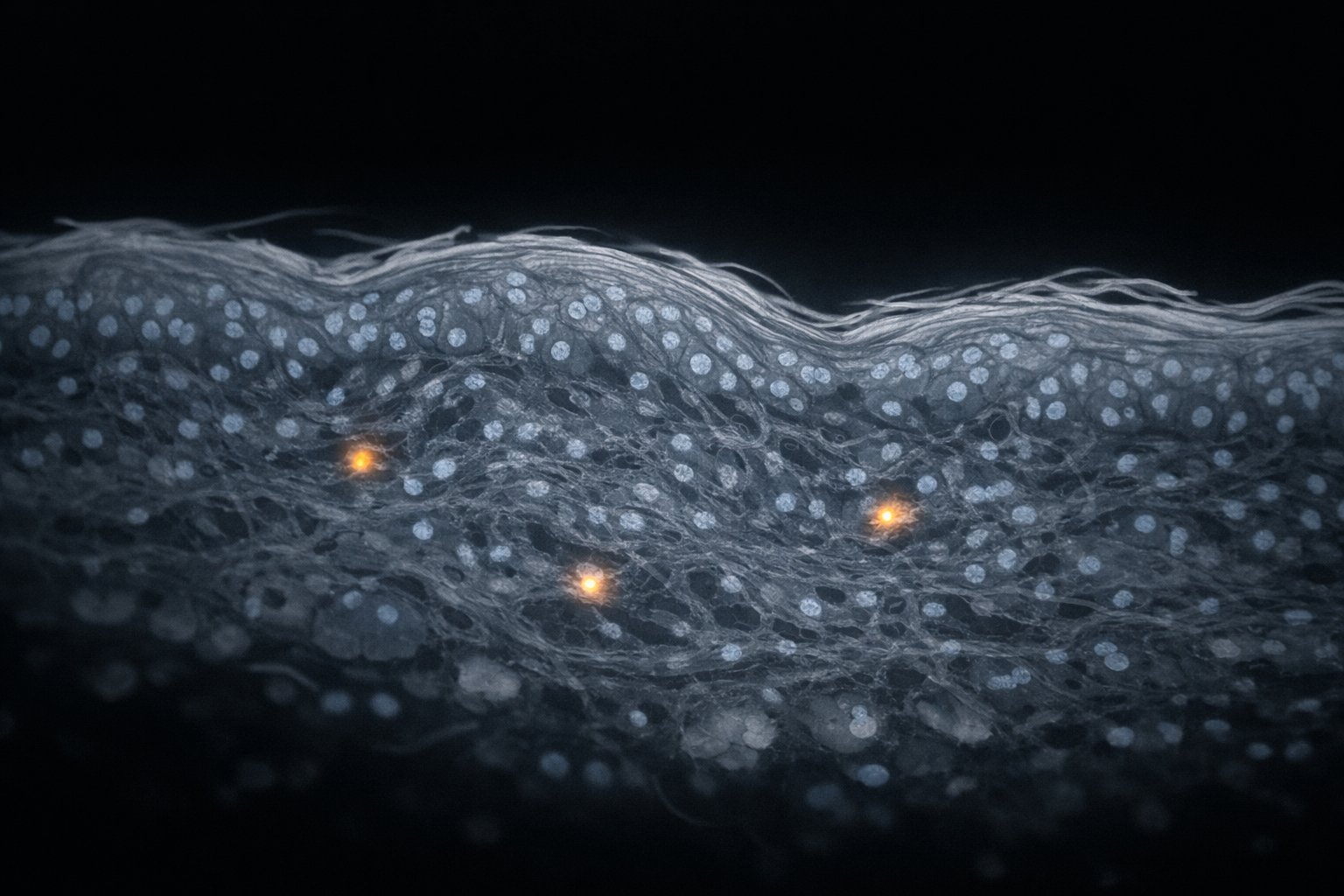
Inflammaging describes the chronic, low-grade, systemic inflammation that increases with age, below the threshold of visible symptoms, but continuously degrading cellular function and accelerating aging at the tissue level.
What inflammaging is
The term “inflammaging”, coined by Claudio Franceschi in 2000, describes the chronic, low-grade, sterile inflammatory state that accumulates with age. Unlike acute inflammation (which resolves), inflammaging is a sustained background elevation of pro-inflammatory cytokines (including IL-6, TNF-α, and IL-1β) that persists without a specific infection or injury driving it.
This state does not produce obvious symptoms. It operates silently, detectable in blood biomarkers, measurable in tissue function, and cumulative in its effects over years and decades.
Key drivers of inflammaging
Multiple converging factors contribute. Cellular senescence, the accumulation of cells that have stopped dividing but have not been cleared, is a major driver. Senescent cells secrete a pro-inflammatory cocktail (the “senescence-associated secretory phenotype” or SASP) that chronically activates inflammatory pathways in surrounding tissue.
Other contributors include mitochondrial dysfunction (which increases ROS production and activates inflammatory NF-κB signaling), chronic gut barrier dysfunction, adipose tissue inflammation, and accumulating DNA damage triggering innate immune responses.
Lifestyle factors that significantly accelerate inflammaging: chronically elevated blood glucose (via AGE formation and direct cytokine activation), sleep deprivation (which acutely elevates IL-6 and TNF-α), and UV radiation (which activates keratinocyte-derived inflammatory cytokines in the skin).
THE TREATMENT CONNECTION
Polynucleotides directly reduce local inflammatory signaling in treated tissue, one of the reasons their effects extend beyond simple collagen stimulation. NAD+ supports sirtuin activity, which modulates NF-κB inflammatory signaling. Both address inflammaging at the molecular level.
Evidence-based interventions
Omega-3 fatty acids (EPA and DHA) have the strongest evidence base for reducing inflammatory cytokines. EPA and DHA compete with arachidonic acid as substrates for inflammatory eicosanoid production, shifting the balance toward less pro-inflammatory signaling. Consistent supplementation with 2 to 4g combined EPA/DHA daily has been shown to measurably reduce IL-6 and CRP in multiple RCTs.
Polyphenols, particularly from green tea (EGCG), berries (anthocyanins), olive oil (oleocanthal), and dark chocolate, activate Nrf2 (the master regulator of antioxidant gene expression) and inhibit NF-κB inflammatory signaling. Their effects are dose-dependent, requiring consistent dietary intake rather than isolated supplementation.
Sleep quality and duration have among the most consistent evidence for reducing inflammatory markers. Even a single night of poor sleep acutely elevates IL-6 and TNF-α. Chronic sleep restriction shifts baseline inflammatory tone upward. Seven to nine hours in a cool room (18 to 19°C), with consistent timing, is the most evidence-backed single behavior for managing inflammaging.
References
- Franceschi C, Bonafè M, Valensin S, et al. Inflamm-aging. An evolutionary perspective on immunosenescence. Ann N Y Acad Sci. 2000;908:244-254. PMID 10911963.
- Franceschi C, Garagnani P, Parini P, et al. Inflammaging: a new immune-metabolic viewpoint for age-related diseases. Nat Rev Endocrinol. 2018;14(10):576-590. PMID 30046148.
- Coppé JP, Desprez PY, Krtolica A, et al. The senescence-associated secretory phenotype: the dark side of tumor suppression. Annu Rev Pathol. 2010;5:99-118. PMID 20078217.
- Pilkington SM, Bulfone-Paus S, Griffiths CEM, et al. Inflammaging and the Skin. J Invest Dermatol. 2021;141(4S):1087-1095. PMID 33358020.
- Gkogkolou P, Böhm M. Advanced glycation end products: Key players in skin aging? Dermatoendocrinol. 2012;4(3):259-270. PMID 23467327.
- Irwin MR, Wang M, Campomayor CO, et al. Sleep deprivation and activation of morning levels of cellular and genomic markers of inflammation. Arch Intern Med. 2006;166(16):1756-1762. PMID 16983055.
- Flores Rodríguez JC, Toledo Avelar LE, Yi K, et al. Polydeoxyribonucleotide (PDRN) in Post-procedure Recovery in Aesthetic Medicine: A Narrative Review. Cureus. 2026;18(5):e108886. PMID 42299173.
- Yang H, Zhang W, Pan H, et al. SIRT1 activators suppress inflammatory responses through promotion of p65 deacetylation and inhibition of NF-κB activity. PLoS One. 2012;7(9):e46364. PMID 23029496.
- Li K, Huang T, Zheng J, et al. Effect of marine-derived n-3 polyunsaturated fatty acids on C-reactive protein, interleukin 6 and tumor necrosis factor α: a meta-analysis. PLoS One. 2014;9(2):e88103. PMID 24505395.
- Rahman I, Biswas SK, Kirkham PA. Regulation of inflammation and redox signaling by dietary polyphenols. Biochem Pharmacol. 2006;72(11):1439-1452. PMID 16920072.
Ready to put this into practice?
Consultations at HALO are free and never obligatory. Bring your questions.
Book Now