
Botox · Trapezius
Trapezius Botox for shoulder tension and the neckline
The trapezius carries much of the tension of desk work and stress. How botulinum toxin is used in this muscle, what it can change, and where evidence ends.
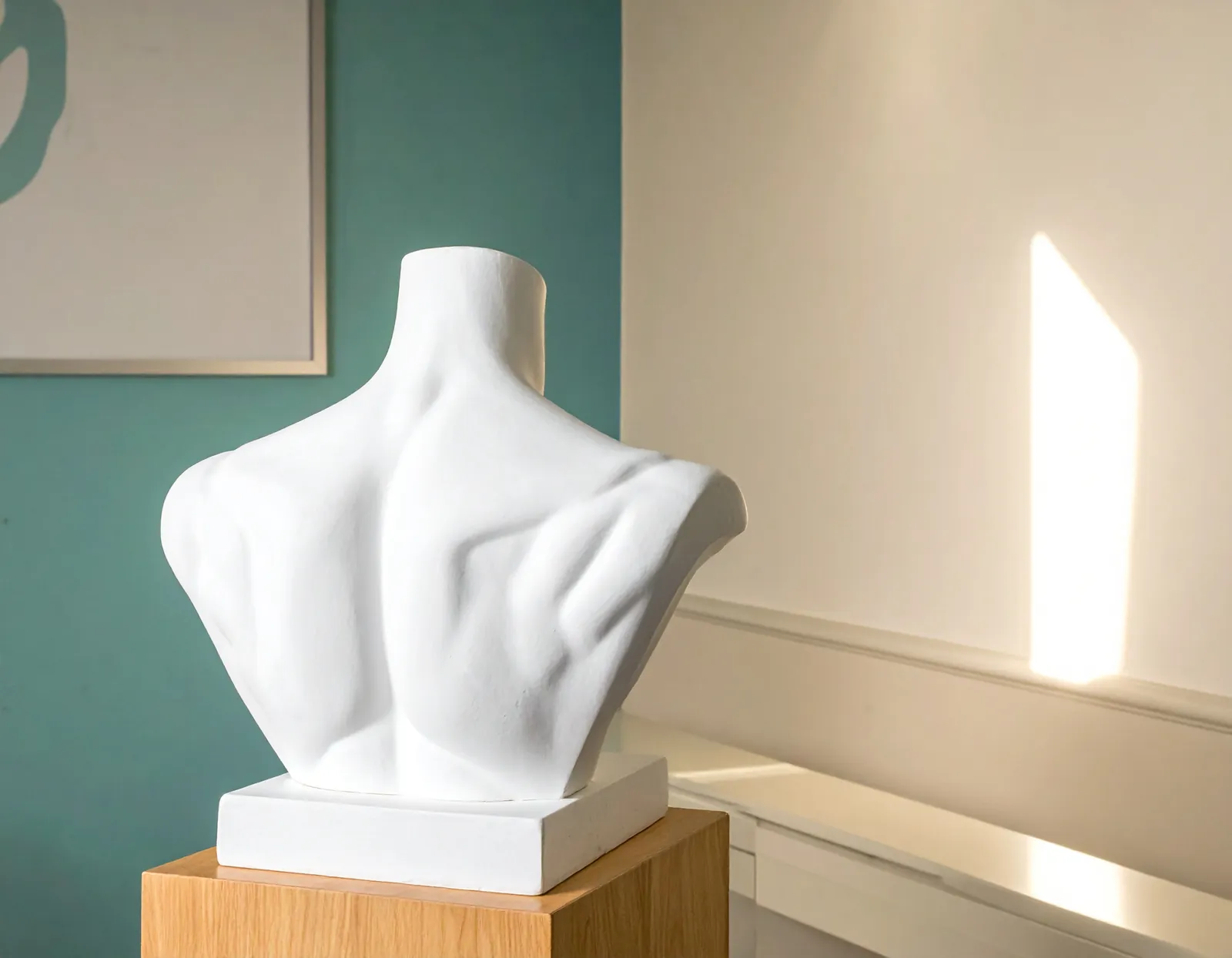
The muscle between neck and shoulder
The trapezius is a large, flat muscle that runs from the base of the skull along the neck to the shoulder blades and the middle of the back. Its upper part lifts the shoulders and stabilizes the neck. Long hours at a desk, a phone held between ear and shoulder, or stress that shows as raised shoulders keep this part of the muscle working almost constantly.
A chronically active upper trapezius can feel tight and tender, and in some people it is also visibly prominent, making the neck look shorter and the transition to the shoulder steeper. These two aspects, tension and contour, are the reasons people ask about a trapezius treatment.
How the treatment works
The principle is the same as in the face: botulinum toxin reduces the release of acetylcholine at the nerve endings, and the treated muscle contracts less forcefully. In the trapezius, the injections are distributed over several points in the upper part of the muscle on both sides. Because the muscle is much larger than facial muscles, the dose is higher. The effect develops over one to two weeks.
If the muscle becomes less active over months, it can also become slightly smaller. That is the basis of the contour effect: a softer line between neck and shoulder. This change develops gradually and is subtle. It is comparable to the slimming effect sometimes seen in the jaw after masseter treatment, which follows the same logic (see Masseter Botox).
What the evidence says about tension and pain
The honest answer is mixed. Botulinum toxin has been studied for myofascial pain, the type of muscle pain with tender trigger points that often affects the trapezius. A Cochrane review (Soares and colleagues, 2014) found the evidence inconclusive: the available studies were small and their results inconsistent. For tension-type headache, a meta-analysis in JAMA (Jackson and colleagues, 2012) did not find a meaningful benefit, unlike for chronic migraine, where botulinum toxin is an established therapy.
In practice, many people report that their shoulders feel less tense after treatment. That experience is real for them, but it should not be confused with proof that the treatment works for everyone. Treatment of the trapezius for aesthetic reasons or for tension is not an approved indication; it is used off-label after medical information.
Side effects and who should be careful
The most common effects are temporary soreness at the injection points and small bruises. Because the trapezius helps lift the arms and stabilize the shoulder, some people notice a temporary feeling of weakness or tiredness when carrying heavy loads or lifting their arms above their head. Athletes in sports that depend heavily on shoulder strength, such as climbing, rowing or swimming, should discuss this in advance. The general contraindications apply: pregnancy, breastfeeding, neuromuscular diseases and known allergies.
Not a substitute for the basics
Shoulder tension rarely has a single cause. Ergonomics, regular breaks, strength training for the back and shoulders, and stress management have the strongest evidence for long-term relief. Persistent pain, pain radiating into the arm, numbness or headache patterns that change should be examined medically before any aesthetic treatment. Sleep and stress also show in the skin, as described in Sleep, stress and skin.
Deciding on treatment
A trapezius treatment can make sense when the muscle is clearly prominent or chronically tense, other causes have been ruled out, and expectations are realistic. Whether this applies to you is decided in a physician consultation, which includes an examination of the neck and shoulders.
References
- Dressler D, Adib Saberi F. Botulinum toxin: mechanisms of action. Eur Neurol. 2005;53(1):3-9. PMID 15650306.
- Zhou RR, Wu HL, Zhang XD, et al. Efficacy and Safety of Botulinum Toxin Type A Injection in Patients with Bilateral Trapezius Hypertrophy. Aesthetic Plast Surg. 2018;42(6):1664-1671. PMID 30206648.
- Kim TH, Kang HI, Lee SJ, et al. Efficacy and Safety of LetibotulinumtoxinA Injection for Trapezius Hypertrophy: A Prospective, Randomized, Double-Blind Trial. Aesthetic Plast Surg. 2026;50(13):5260-5268. PMID 41927997.
- Soares A, Andriolo RB, Atallah AN, et al. Botulinum toxin for myofascial pain syndromes in adults. Cochrane Database Syst Rev. 2014;2014(7):CD007533. PMID 25062018.
- Leonardi G, Alito A, Portaro S, et al. Intramuscular injections of botulinum toxin for the treatment of upper back myofascial pain syndrome: A systematic review of randomized controlled trials. Eur J Pain. 2024;28(3):369-381. PMID 37950343.
- Jackson JL, Kuriyama A, Hayashino Y. Botulinum toxin A for prophylactic treatment of migraine and tension headaches in adults: a meta-analysis. JAMA. 2012;307(16):1736-1745. PMID 22535858.
- Dodick DW, Turkel CC, DeGryse RE, et al. OnabotulinumtoxinA for treatment of chronic migraine: pooled results from the double-blind, randomized, placebo-controlled phases of the PREEMPT clinical program. Headache. 2010;50(6):921-936. PMID 20487038.
- Andersen LL, Jørgensen MB, Blangsted AK, et al. A randomized controlled intervention trial to relieve and prevent neck/shoulder pain. Med Sci Sports Exerc. 2008;40(6):983-990. PMID 18461010.
Ready to put this into practice?
Consultations at HALO are free and never obligatory. Bring your questions.
Book Now